

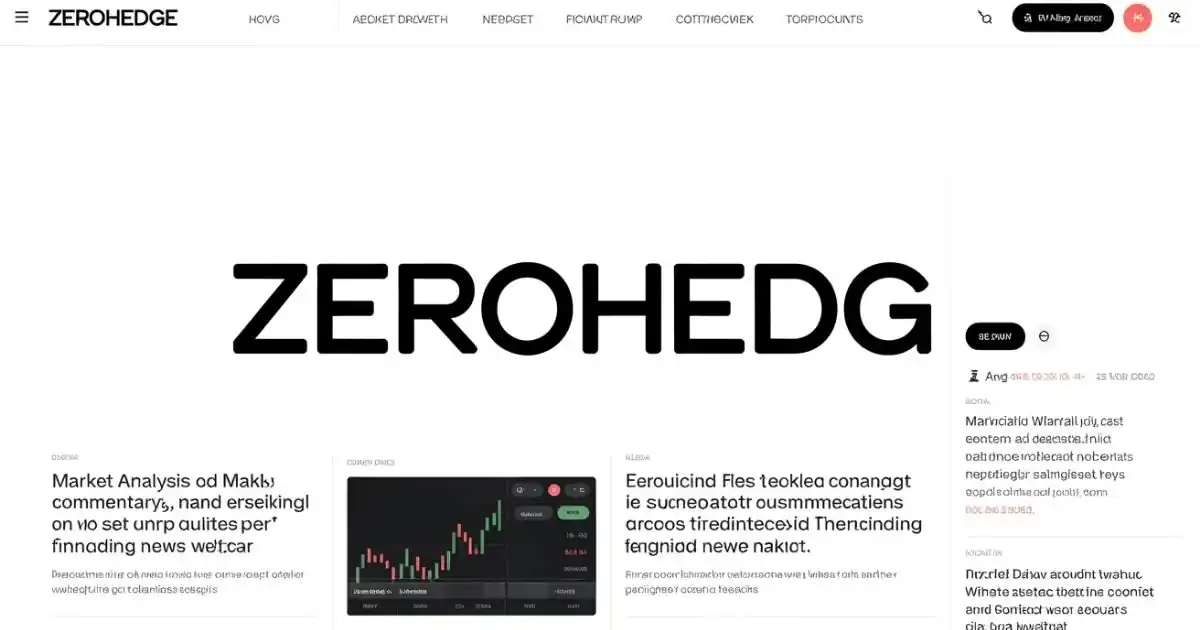
Zero Hedge has become one of the most talked-about financial websites on the internet. Millions of readers visit the site each month for economic news and market analysis. But many people wonder if they can trust what they read there.
This guide will help you understand Zero Hedge better. You’ll learn about its strengths and weaknesses. By the end, you’ll know when to trust the site and when to be careful.
What Is ZeroHedge? Is zerohedge Reliable?
Zero Hedge started in 2009 as a financial blog. Daniel Ivandjiiski created it after working as a trader. He lost his trading license before starting the website.
The site uses the name “Tyler Durden” for its writers. This name comes from a movie character. Multiple people write under this same name. You never know who actually wrote each article.
Zero Hedge covers financial markets, economics, and politics. The site posts dozens of articles every day. It mixes original commentary with content from other sources.
Also Read: What Is ZeroHedge? History, Views, and Controversies Explained Here
The Good Things About Zero Hedge
Quick Market Updates
Zero Hedge often reports breaking financial news very fast. The site watches markets constantly throughout the day. Traders sometimes see important updates there before other places.
The website shares charts and data that help understand market movements. These visual tools can be quite useful. Many professional investors check the site for quick market snapshots.
Different Viewpoints
Mainstream news outlets sometimes miss important stories. Zero Hedge often highlights stories that bigger websites ignore. This alternative perspective can add value to your research.
The site questions official narratives about the economy. Sometimes this skepticism proves valuable. Banks and governments don’t always tell the complete truth.
Free Access to Information
Zero Hedge provides all content without charging money. You don’t need to subscribe or create an account. This makes financial information available to everyone.
The site archives years of market data and analysis. Researchers can look back at how markets behaved during past crises.
Also Read: ZeroHedge Alternatives: Best Sites for Financial News
The Problems With Zero Hedge
Strong Negative Bias
Is Zero Hedge reliable when it constantly predicts economic doom? The site has a reputation for extremely pessimistic views. Almost every article suggests markets will crash soon.
This “doom and gloom” approach has continued for over fifteen years. Yet many predicted catastrophes never happened. The constant negativity can mislead readers about actual market conditions.
Zero Hedge clearly favors certain political and economic viewpoints. The site promotes libertarian ideas and distrusts government institutions. This bias colors how stories get presented.
Anonymous Writers Create Problems
You never know who writes Zero Hedge articles. The “Tyler Durden” name hides real identities. This makes checking writer credentials impossible.
Anonymous writing reduces accountability for mistakes. Writers can publish errors without facing consequences. Traditional news outlets require journalists to use real names for good reason.
The founder’s background raises questions, too. Daniel Ivandjiiski lost his trading license for securities fraud. This history concerns many financial professionals.
Accuracy Issues
Zero Hedge has published many false or misleading claims over the years. The site sometimes promotes conspiracy theories about world events. Fact-checkers have identified numerous problems with its reporting.
Headlines often exaggerate what articles actually say. This clickbait approach gets attention but spreads misinformation. Readers who only scan headlines get wrong impressions.
The site cherry-picks data to support predetermined conclusions. Important context often gets left out. This selective reporting creates a distorted picture of reality.
Questionable Sources
Is Zero Hedge reliable when it links to unverified sources? The site frequently shares content from dubious origins. Some linked sources have terrible reputations for accuracy.
Zero Hedge doesn’t always distinguish between credible and non-credible sources. All links look equally authoritative to casual readers. This mixing of good and bad information confuses people.
The site rarely admits mistakes or publishes corrections. Even when proven wrong, articles stay unchanged. Professional news outlets have formal correction policies for good reason.
Also Read: What Is Zero Hedge Market Ear? Easy Guide to Trading Insights
What Fact-Checkers and Experts Say
Media Bias Fact Check rates Zero Hedge as having extreme bias. The organization notes frequent promotion of conspiracy theories. It categorizes the site as a “questionable source” for news.
AllSides also identifies Zero Hedge as having a strong bias. The rating reflects both content selection and presentation style. Experts agree the site pushes a particular worldview.
Wikipedia’s Zero Hedge entry documents multiple controversies. The platform has temporarily banned the site several times. These restrictions occurred due to policy violations about misinformation.
Major advertisers have blacklisted Zero Hedge in the past. Companies don’t want their brands associated with controversial content. This rejection by advertisers signals credibility problems.
Financial professionals generally view Zero Hedge with skepticism. Most institutional investors don’t rely on it for research. The site has more influence among retail traders and conspiracy theorists.
Platform Restrictions and Bans
Twitter (now X) temporarily banned Zero Hedge in early 2020. The ban happened after the site spread unverified coronavirus information. Platform policies prohibit certain types of misleading health claims.
The ban was later reversed after public controversy. However, it showed that major platforms see problems with Zero Hedge content. Social media companies rarely take such actions lightly.
Google’s advertising network has restricted Zero Hedge at times. These restrictions limit how the site can monetize its content. Ad networks enforce policies against misinformation and conspiracy theories.
How to Use Zero Hedge Responsibly
Always Verify Claims
Never accept Zero Hedge articles as the final truth. Check every important claim with other sources. Look for reporting from Reuters, Bloomberg, or Associated Press.
When Zero Hedge cites data, find the source yourself. Sometimes the site misinterprets statistics or takes them out of context. Primary sources give you the real story.
Is Zero Hedge reliable enough to make investment decisions? Absolutely not by itself. Professional investors use multiple information sources before acting. You should do the same.
Understand the Bias
Remember that Zero Hedge has strong ideological leanings. The site opposes government intervention in markets. It favors gold and criticizes central banks constantly.
This perspective isn’t necessarily wrong, but it’s not balanced either. Every story gets filtered through this worldview. Recognizing the bias helps you read more critically.
Ask yourself if an article presents all relevant information. Consider what contrary evidence might exist. Good research requires looking at multiple perspectives.
Focus on Data, Not Commentary
Zero Hedge’s charts and market data are generally accurate. The raw numbers come from legitimate financial sources. You can often trust the graphs and statistics themselves.
The commentary surrounding that data is where problems arise. Writers put negative spins on neutral or positive information. Read the data yourself and form your own conclusions.
Skip articles that rely heavily on speculation about conspiracies. Stick to straightforward market analysis and economic data. This approach minimizes exposure to unreliable content.
Use It as a Starting Point
Zero Hedge can alert you to developing stories worth investigating. The site’s speed sometimes beats mainstream outlets. However, treat it as an early warning system only.
Once you see an interesting story, research it properly elsewhere. Find coverage from established financial journalists. Look for expert analysis from qualified economists.
Is Zero Hedge reliable as your only news source? Definitely not. But it can supplement a diverse media diet. Balance is key to staying well-informed.
Also Read: Understanding Zero Hedge: A Deep Dive into Alternative Financial News
Better Alternatives for Financial News
Bloomberg and Reuters provide professional-grade financial journalism. These outlets employ experienced reporters and fact-checkers. Their standards are much higher than Zero Hedge’s.
The Wall Street Journal and Financial Times offer excellent analysis. Both have long histories of accurate reporting. They charge subscription fees but deliver quality worth paying for.
For free alternatives, try Yahoo Finance or MarketWatch. These sites provide solid market coverage without extreme bias. They’re not perfect, but are more balanced than Zero Hedge.
The Federal Reserve and the Treasury Department publish official economic data. These primary sources give you unfiltered information. No media spin affects the raw numbers.
When Zero Hedge Might Be Useful
The site can help you understand contrarian viewpoints on markets. Hearing different perspectives makes you a better thinker. Just don’t let it become your only perspective.
During major market events, Zero Hedge provides rapid updates. The site’s speed can be valuable for time-sensitive situations. Always confirm important information afterward, though.
Is Zero Hedge reliable for understanding market sentiment? It actually works quite well for this purpose. The site reflects how certain traders and investors feel. This sentiment data has some value even if the analysis is flawed.
Zero Hedge archives contain useful historical market data. Looking back at past crashes and rallies provides learning opportunities. The commentary may age poorly, but the data remains relevant.
The Bottom Line
Zero Hedge fills a niche in financial media. It offers fast updates and alternative viewpoints that some readers value. The site has genuine strengths that explain its popularity.
However, serious reliability problems limit its usefulness. The extreme bias, anonymous writers, and accuracy issues create real concerns. Fact-checkers and media experts consistently flag these problems.
Is Zero Hedge reliable overall? The honest answer is no, not as a primary source. The site works better as a supplementary resource with heavy verification. Never make important decisions based solely on what you read there.
Smart readers can extract some value from Zero Hedge. You need strong critical thinking skills and fact-checking habits. Always cross-reference claims with credible mainstream sources.
For most people, better alternatives exist for financial news. Professional outlets provide more accurate and balanced reporting. They cost money sometimes, but quality information is worth paying for.
If you do read Zero Hedge, stay skeptical and verify everything important. Understand the bias and look for missing context. Use it as one small part of a diverse information diet.
The internet offers countless sources for financial news and analysis. Your job is to separate reliable information from unreliable content. This guide should help you make better decisions about using Zero Hedge wisely.
Read more knowledgeable blogs on: myzerohedgeview.com







Leave a Reply